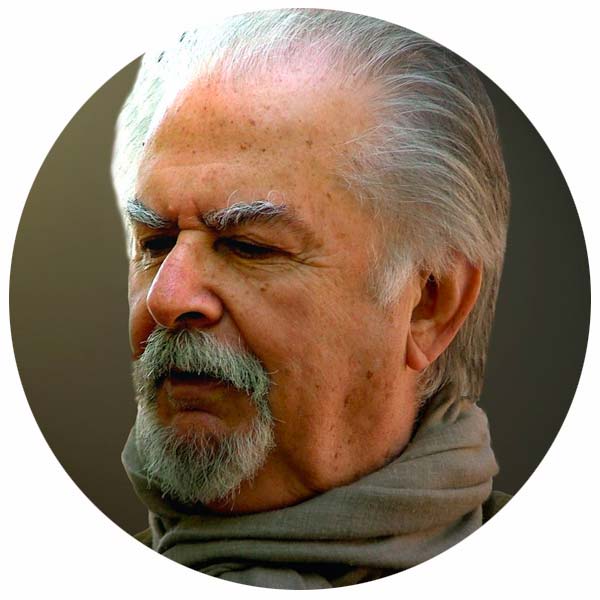
Fernando Botero Angulo is a Colombian figurative artist and sculptor born in Medellín, Colombia, in 1932.
His signature style, also known as “Boterismo”, depicts people and figures in large, exaggerated volume, which can represent political criticism or humor. He is considered the most recognized and quoted living artist from Latin America, and his art can be found in highly visible public places around the world, such as Park Avenue in New York City and the Champs-Élysées in Paris.
He began painting when he was a teenager and was inspired by the pre-Columbian and Spanish colonial art that surrounded him, as well as by the political work of Mexican muralist Diego Rivera. His own paintings were first exhibited in 1948, and two years later, he had his first one-man show in Bogota.
While studying painting in Madrid in the early 1950s, he made his living by copying paintings housed in the Prado Museum—particularly those of his idols at the time, Francisco de Goya and Diego Velázquez—and selling them to tourists. He spent much of the rest of the decade studying the art treasures of Paris and Florence.
Throughout the 1950s Botero began experimenting with proportion and size. When he moved to New York City in 1960, he had developed his trademark style: the depiction of round, corpulent humans and animals. In these works he referenced Latin-American folk art in his use of flat, bright colour and boldly outlined forms.
In 1973 Botero returned to Paris and began creating sculptures in addition to his works on canvas. These works extended the concerns of his painting, as he again focused on rotund subjects. Successful outdoor exhibitions of his monumental bronze figures, including Roman Soldier (1985), Maternity (1989), and The Left.
Botero also continued to paint, creating bullfight scenes throughout the 1980s and later finding inspiration in topical issues. He examined Columbia’s violence and illegal-drug industry in works such as The Death of Pablo Escobar (1999), which shows the leader of the Medellín cartel being fatally shot. In 2004, after the torture of Iraqi prisoners by U.S. soldiers at the Abu Ghraib prison came to light, Botero began creating numerous paintings and drawings about this scandal.
Self-titled “the most Colombian of Colombian artists” early on, he also received the International Sculpture Center’s Lifetime Achievement in Contemporary Sculpture Award in 2012.